

Interest Age: 4-8
Themes: Emotional Regulation, Feelings
BOOK REVIEW
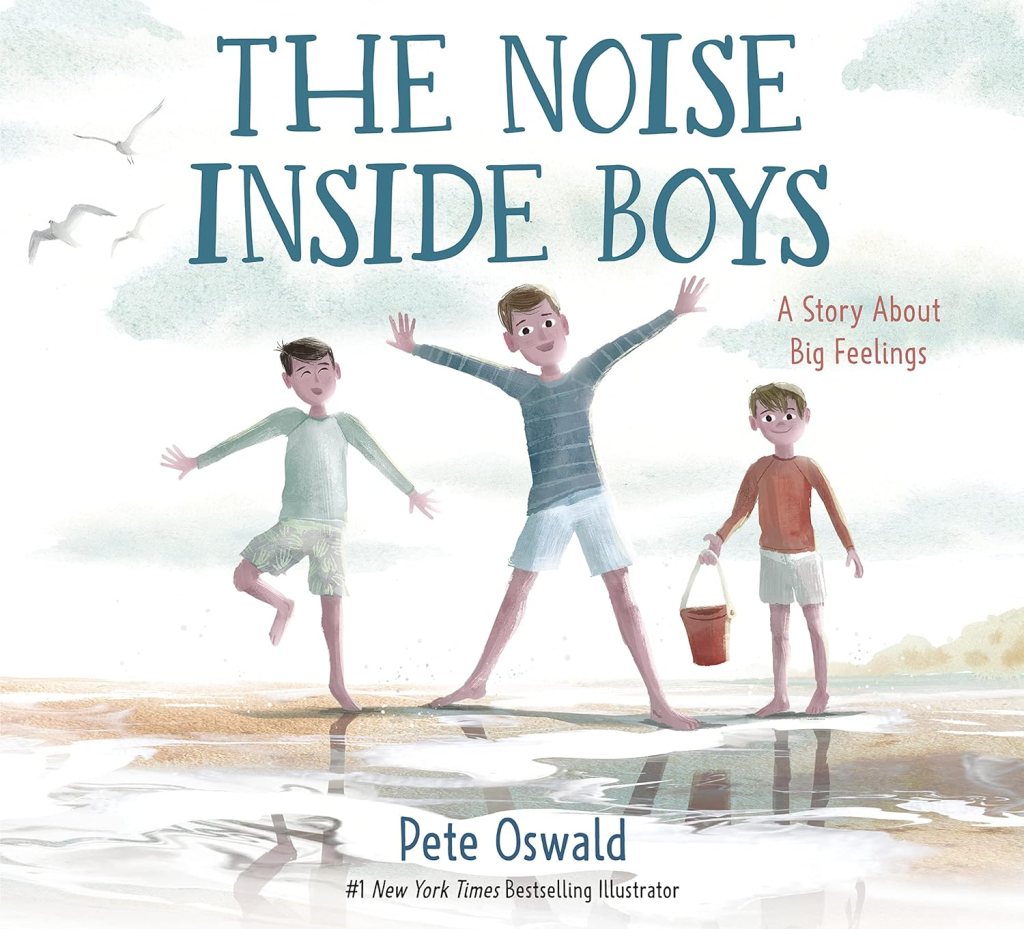
I love a good SEL (Social-Emotional Learning) book and this one is just as beautifully worded as it is illustrated. When a little boy is overwhelmed by upset feelings towards his older brothers, his dad pulls him aside to explain the wide range of emotions that we all experience, and how sitting with our feelings and understanding them can help us move through them.
I love that there has recently been a societal effort to push back against the stereotype that boys and men can’t cry or have emotions. And this book, which features a father teaching his son that ALL his feelings are valid, is one that sets such a good example for parents and children today. If you’re looking for a good gift for a little kid with big feelings (I guess that covers pretty much all of them), or for yourself as a caregiver that might need a little help teaching your child about their emotions, I highly recommend this book.
And for further reading about recognizing and understanding emotions, check out:
(links are to Bookshop.org- not affiliated)
- Tiger Days, by M.H. Clark
- The Color Monster, by Anna Llenas
- How Do You Feel? by Lizzie Rockwell
- Big Feelings, by Alexandra Penfold
- In My Heart, by Jo Witek
Tips to Support Big Feelings at Home
- While your child is feeling calm, help them find somewhere comfortable where they can go when they are having big emotions. Some families set up a “peace corner” in their child’s bedroom with pillows, books and sensory materials to help with emotional regulation. Our calming corner has a huge comfy beanbag chair and a “body tools” basked that contains stretchy bands, a visual timer, pop-its, noise cancelling headphones, and stress balls so my son can choose a tool to help him as he works through his anger or sadness. I also suggest keeping a water bottle nearby because drinking water is extremely helpful in regulating the nervous system. You can also print out a copy of the “Know How You Feel” picture at the end of The Noise Inside Boys and post it near the peace corner to help your child recognize and name their feelings.
- When your child is feeling calm/regulated, help them create a list of things that make them feel happy. They can draw pictures and make their list colorful (or not), then post their list somewhere in their calming corner. If any of the things on their “happy list” are available at home (a stuffed animal, a special toy, etc.) remind them that they can always go get that item when they are feeling upset.
- Remember, if your child was destructive or rude during a big emotional episode, they are physically incapable of learning anything while they are still dysregulated (the survival (fight/flight) response kicks in during a meltdown and the reasoning part of the brain shuts down) so this is NOT the time to tell them that their behavior was inappropriate, or to try to lecture them or teach them what to do next time. Give them time to feel their feelings, let them cry or hit a pillow or tear up some paper, whatever it is that they can do without hurting themselves or anyone else, and keep your talking to an absolute minimum until they start to relax. Then in a calm moment, remind them of how they can be safe and respectful the next time they feel upset. Some kids like to role-play or pretend with puppets to practice different scenarios. Mine absolutely hates any form of pretend play so this doesn’t work for us at home, but I’ve successfully used this strategy with lots of students in the past.
- Remember: Having big feelings can be really scary for little kids, especially when they see the adults around them get upset or angry at the same time. So try your best to remain steady and calm, help them to their safe space (carry them if necessary), and know that this meltdown will pass. It can also be comforting to them and to you as well to remind them that you love them and you are not afraid of their big feelings. Big feelings happen to everyone and you are there to help your child through them.
 Reading Expressions